//
••
•
•

Platform protection is limited and timing determines everything. Here's what you can actually do when vacation rentals don't match reality.
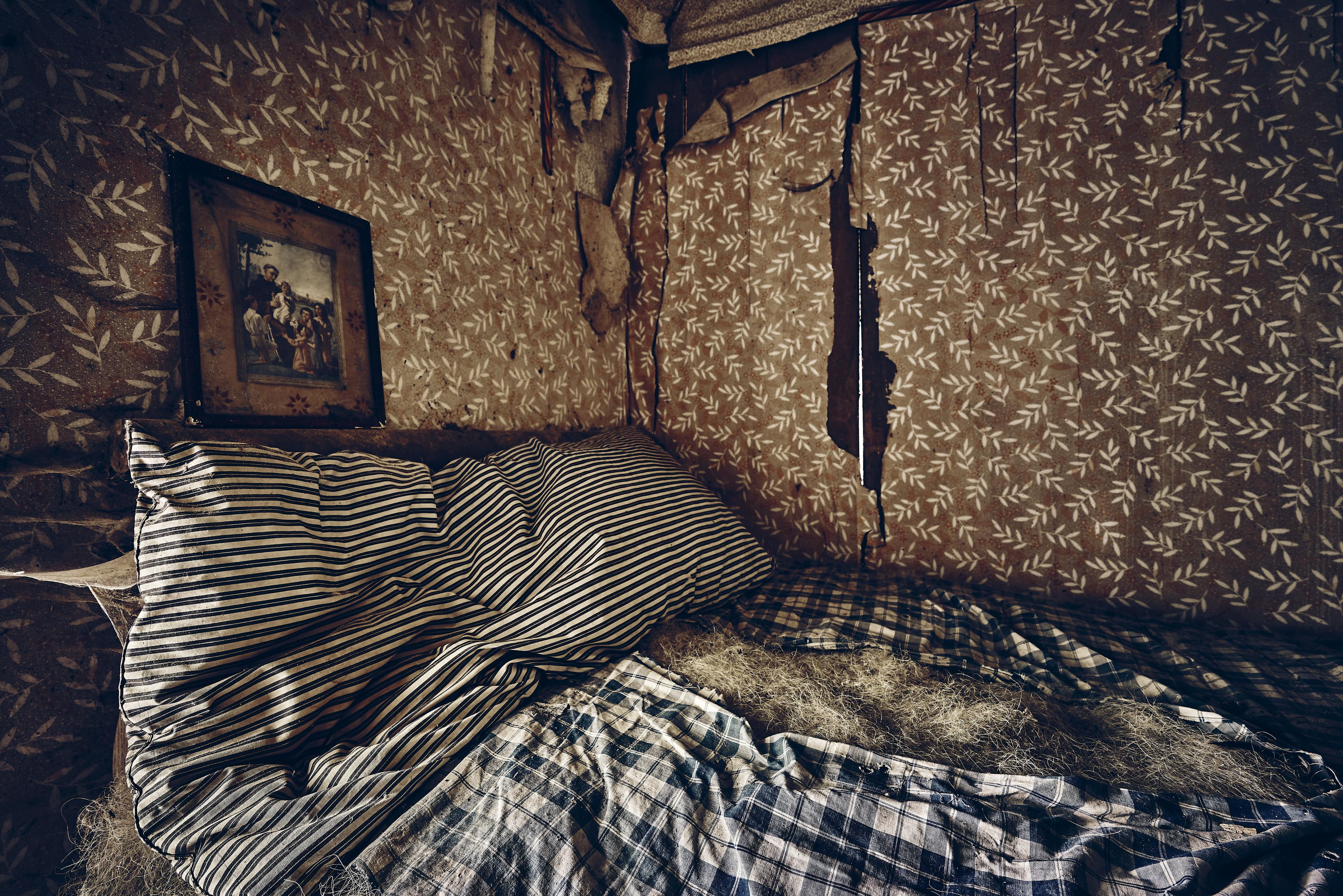
You unlock the door and step inside. The photos showed natural light, minimal decor, that promised "ocean view" the host mentioned three times in the listing. Instead you're looking at a window facing a brick wall, furniture that smells like mildew, and what appears to be active construction on the balcony the photos somehow didn't capture.
You check your phone. It's 6 PM on a Friday. You've been traveling for 11 hours. You're here for a week, paid $1,800, and this is not what you booked. You open the Airbnb app and start typing a message to the host. Your finger hovers over send while you're trying to figure out how angry to sound, whether to ask for a refund, whether you should just leave.
What you do in the next few hours determines whether you have any recourse at all.
Here's what catches most people: Airbnb requires you to report problems within 72 hours of discovering them to be eligible for a refund or rebooking assistance. Not 72 hours from the end of your stay. Not whenever you get around to it. Seventy-two hours from when you first notice the issue.
That clock starts ticking the moment you walk through the door.
This isn't arbitrary cruelty. It's how Airbnb prevents people from staying the full week, enjoying the place despite its flaws, and then demanding money back on the way out. But it also means that if you're tired, if you're conflict-averse, if you decide to "see how it goes" for a few days before complaining, you might lose your only chance at getting your money back.
The 72-hour rule applies to everything: misleading photos, missing amenities, cleanliness issues, safety problems. The timer is already running.
Stop unpacking. Don't settle in. Don't post the "we made it!" photo to your group chat. Take out your phone and document everything that's wrong.
Not artful photos. Evidence photos. According to Airbnb's Guest Refund Policy, you need photos or videos showing the specific problems you're reporting. Take these methodically:
If the listing promised an ocean view and you got a brick wall, photograph both the wall and the listing's photo of the view. If the place isn't clean, photograph the dirty surfaces, the unmade bed, the bathroom condition. If amenities are missing or broken, photograph what's there (or not there) and screenshot where the listing advertised them.
These photos are your evidence. Without them, disputes become your word against the host's word. With them, you have documentation that's hard to argue with.
This feels backwards when you're angry and the host clearly misrepresented their property, but Airbnb's process requires it. You must contact the host before escalating to Airbnb support.
Here's why: Airbnb wants to see that you gave the host a chance to fix it. If you skip straight to demanding a refund from Airbnb, they'll ask why you didn't message the host first. The host gets the opportunity to resolve it, and if they do, that's the end of the process.
Send a message through the Airbnb app (not text, not email—only messages through the platform count):
💡TipHi [Host name], I've just checked in and there are several issues that don't match the listing. The view is blocked by construction, not the ocean view shown in photos. There's a strong mildew smell in the bedroom, and the air conditioning isn't working. I've taken photos. This isn't what I booked. I'd like to discuss a solution—either fixing these issues immediately or canceling for a full refund.
Be specific. Be factual. Don't editorialize about how disappointed you are or how this ruined your vacation. State the problems, reference the photos, and say what you want: fixes or a refund.
The host now has a few options: offer to fix the problems, offer a partial refund, agree to full cancellation and refund, or ignore you.
If the host doesn't reply within a reasonable time (a few hours, not a few days—remember your 72-hour window is ticking), or if they refuse to provide a refund, you escalate to Airbnb.
Go to your reservation in the app, select "Get Help," then "Request a refund or credit." You'll explain the issue, upload your photos, and show the message thread with the host. Airbnb's Resolution Center handles these disputes.
Here's what Airbnb will look at:
Airbnb covers specific issues under their Rebooking and Refund Policy:
What's not typically covered: minor inconveniences, aesthetic differences that don't affect habitability, small missing items that weren't central to the listing, or things you just don't like but aren't actually wrong.
If the problem is about safety—gas leaks, broken locks, mold, structural damage, no heat in winter, no cooling in dangerous heat—Airbnb has a 24-hour safety line and will prioritize your case.
Don't use the safety line for "this place isn't as nice as the photos." Use it for "I don't feel safe staying here" or "This is a health hazard."
Safety issues give you more leverage and faster response times. Airbnb will often rebook you immediately or refund you without the usual back-and-forth, because they're liable if something happens to you in an unsafe property.
When Airbnb decides in your favor, they rarely issue full refunds unless you check out immediately. Their calculation is based on:
If you arrived Friday, complained Saturday, and Airbnb ruled in your favor Monday but you stayed the full week anyway, you'll likely get a partial refund for the disrupted days, not the full booking.
If you want a full refund, you usually need to leave. Airbnb's position is: if it was bad enough to warrant a full refund, why did you stay?
This creates a tough choice: leave and find somewhere else to stay (expensive, stressful, time-consuming), or stay and accept a partial refund. There's no good answer, but know that staying significantly reduces your refund amount.
Sometimes Airbnb doesn't offer money back—they offer to help you find a different place. This sounds helpful until you realize:
Rebooking can work if the issue is discovered early (first day of a week-long stay) and you're in a location with plenty of options. It's nearly useless if you're already three days in, or if you're somewhere remote with few alternatives.
You can refuse rebooking and insist on a refund. You're not obligated to accept their rebooking offer.
If Airbnb denies your claim or offers an insufficient refund, you have one more tool: disputing the charge with your credit card company.
Credit card chargebacks are governed by different rules than Airbnb's policies. Under the Fair Credit Billing Act, you can dispute charges for services not rendered as described. The credit card company investigates independently of Airbnb.
You'll need to show:
Credit card disputes take 30-90 days to resolve. During that time, the charge is usually credited back to your account temporarily while they investigate. If you win, you get your money back. If the merchant (Airbnb) successfully defends the charge, the temporary credit is reversed and you owe the money again.
The downside: Airbnb doesn't like chargebacks. Initiating one may result in your account being restricted or banned. If you plan to use Airbnb again, chargebacks should be your absolute last resort after exhausting all other options.
Use chargebacks for: clear misrepresentation, safety issues Airbnb ignored, or situations where Airbnb refused to help despite obvious policy violations.
Don't use chargebacks for: situations where Airbnb offered a resolution you just didn't like, minor issues, or times when you didn't follow the 72-hour reporting rule.
Monthly rentals often fall outside Airbnb's standard protection policies. Many hosts use monthly bookings specifically to avoid the platform's refund policies, because Airbnb treats long-term stays differently.
VRBO, Booking.com, and other platforms have their own policies, usually less protective than Airbnb's. VRBO's Book with Confidence Guarantee has a 24-hour (not 72-hour) reporting window for some issues. Booking.com's policies vary by property type and whether you booked through their platform or were redirected.
If you're booking through platforms other than Airbnb, read the specific protection policy before you book. Don't assume they all work the same way.
Direct bookings (paying the host outside any platform) give you almost no recourse except small claims court or chargebacks. If someone asks you to "book direct to save the platform fees," know that you're also losing all platform protection.
Sometimes the best option is the one that feels like giving up: stay despite the problems, don't fight for a refund, just get through the trip.
This makes sense when:
Be honest about whether this is a "that host stole $1,800 from me" situation or a "this place isn't as nice as I hoped" situation. Not every disappointment is worth the fight, and sometimes accepting a subpar rental and enjoying your trip anyway is better than spending half your vacation in a dispute.
Before you book your next vacation rental, take two minutes to create a simple inspection checklist on your phone:
Do this within the first hour of check-in. If problems exist, your documentation is fresh, timestamped, and sent within Airbnb's reporting window. If everything's fine, you have proof of the condition you received it in, protecting you from hosts claiming you damaged something you didn't.
The goal isn't paranoia. The goal is having a clear record that gives you options if things go wrong, instead of discovering the rules after you've already violated them.
Found this article helpful? Share it with fellow travelers!
Hospital quality varies wildly across regions. Insurance activation sequence matters. Knowing the steps before you need them saves decision-making when someone's in pain.
Most travelers waste critical time after losing a passport. These immediate steps determine your recovery timeline and whether you make your flight.
Most travelers watch their digital life unravel after phone theft. The actions you take in the first 60 minutes determine whether this becomes an inconvenience or a cascading security crisis.