//
••
•
•

That $40 you saved on Expedia can cost $300 when plans change. Here's how to decide between booking direct and third-party platforms based on what actually matters.
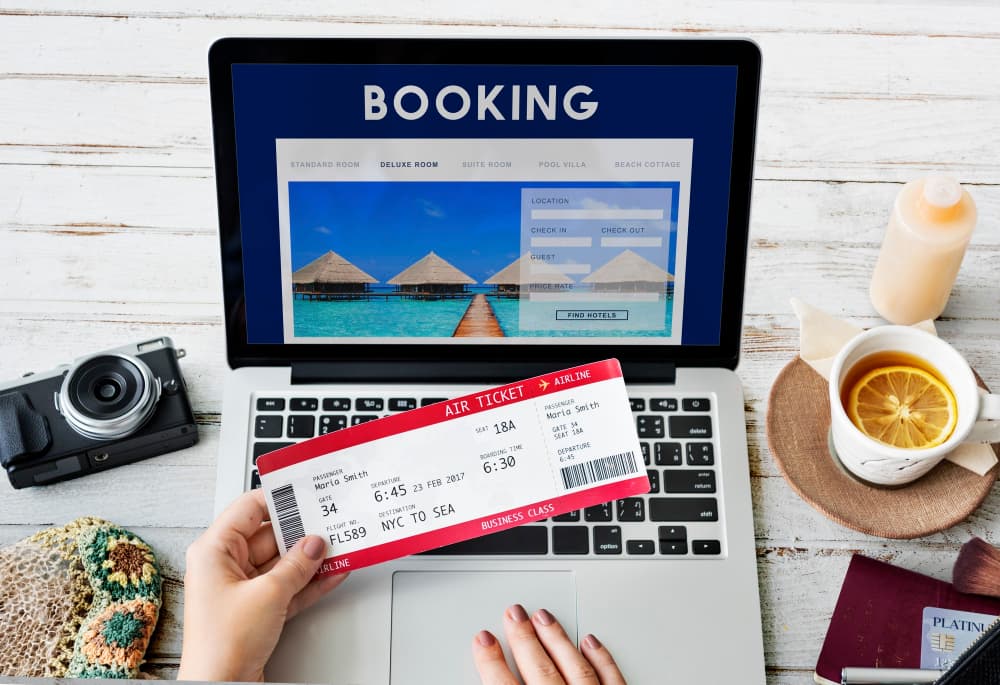
You saved $42 booking through Expedia instead of the hotel's website. Three days before your trip, your flight gets canceled and rescheduled for the next morning. You call the hotel to move your reservation by one night.
"I'm sorry, you booked through a third party. You'll need to contact them."
You call Expedia. They can move the reservation, but there's a $125 change fee plus the difference in rate for the new night, which is now $89 higher because you're booking inside the 72-hour window. Total cost: $256.
If you'd booked direct, the hotel would have moved it for free. Your $42 savings just cost you $214.
The cheapest rate at booking time isn't always the cheapest rate when reality interferes.
Third-party platforms negotiate bulk rates with hotels and airlines. Sometimes those rates beat what the property offers on its own site. Sometimes they don't.
Package deals (flight + hotel) can deliver real savings by bundling inventory. According to research by PhocusWire, aggregators like Expedia and Booking.com can offer combined packages 10-20% below the sum of separate bookings because they're buying inventory in volume and offsetting margins across products. If you're booking a hotel and flight together, and your dates are locked in stone, the aggregator might save you $200 or more.
But that's not the same as getting the best hotel rate. It's getting the best bundle rate. The hotel alone might be cheaper direct, but the package math works out when flights are included.
Rate parity rules theoretically prevent hotels from undercutting aggregator prices on their own sites. Hotels that list on Booking.com or Expedia often agree not to advertise lower rates elsewhere. But rate parity has loopholes. Hotels can offer member discounts, loyalty points, free breakfast, or room upgrades on direct bookings without violating the agreement. A $240 room on Booking.com might be $240 on the hotel site, but the direct booking includes breakfast worth $35 and earns you 2,000 loyalty points.
The visible rate looks identical. The total value is not.
Budget hotel chains and independent properties sometimes ignore rate parity entirely and offer 5-10% off for direct bookings. If you're comparing a Courtyard by Marriott at $165 on the hotel site versus $178 on Expedia, you're seeing this in action.
The real expense isn't the booking fee. It's what happens when you need to change something.
Hotel policies for direct bookings often include flexible cancellation up to 24-48 hours before arrival. Book through an aggregator, and you're subject to their cancellation terms, which are frequently more restrictive. A hotel might allow free cancellation until 6pm the day before. Expedia's non-refundable rate for the same room might lock you in the moment you book.
When something goes wrong on-site—a room that doesn't match the listing, a missing amenity, a maintenance issue—the hotel can fix it immediately if you booked direct. If you booked through Booking.com, the front desk will often say "we can't adjust your rate or offer a refund, you'll need to contact the platform." Now you're calling customer service, explaining the problem to someone who can't see the room, waiting on hold, and hoping they authorize a resolution. The hotel staff are standing there, willing to help, but handcuffed by the terms of your third-party booking.
This isn't theoretical. A 2022 study by Cornell University's Center for Hospitality Research found that guest satisfaction scores were consistently lower for third-party bookings compared to direct bookings at the same properties, primarily due to problem resolution friction. When something needs fixing, direct bookers got help immediately. Aggregator bookers got transferred.
Credit card protections can also weaken with third-party bookings. Many travel credit cards offer trip delay insurance, lost luggage reimbursement, and dispute protections when you book travel directly. But if you book a hotel through Expedia and pay Expedia (not the hotel), your credit card sees a charge from Expedia, not from a hotel. Some card benefits explicitly exclude third-party purchases, or they require you to fight through the aggregator's process before the credit card will step in. Check your card's terms before assuming coverage applies the same way.
Hotels want you to book direct because it saves them the 15-25% commission they pay to aggregators. To incentivize this, they offer loyalty points.
If you're staying at a Hilton property three times this year, those direct bookings will earn points toward free nights, room upgrades, and elite status. Book the same stays through Expedia, and you'll earn Expedia rewards, which are worth less and only usable on future Expedia bookings. You've locked yourself into their ecosystem.
For frequent travelers, this matters. A business traveler who stays 20 nights a year at Marriott properties can hit Silver Elite status, which includes late checkout, bonus points, and better customer service. Those benefits don't accrue from third-party bookings.
For once-a-year leisure travelers, loyalty points are mostly noise. Earning 2,500 Hilton points on one stay won't get you much. You'd need to stay 15 more times to earn a free night. If you're not traveling often, optimizing for points is a distraction from optimizing for price and flexibility.
If your trip is completely fixed—dates locked, no chance of changes, no brand loyalty to build—and the aggregator is cheaper, book it. You've evaluated the risks and decided flexibility has no value to you this time. That's rational.
If you're booking a package (flight + hotel + maybe car rental), the bundle savings often outweigh the flexibility cost. Just know what you're trading.
If you're booking far in advance and want the comfort of "free" cancellation, some aggregator rates offer flexible cancellation at a small premium. Booking.com's flexible rates cost 10-15% more than non-refundable ones but allow cancellation up to 24 hours before arrival. That's often still cheaper than the hotel's flexible direct rate. Do the math for your specific case.
But if there's any chance you'll need to modify your reservation, or if you care about loyalty benefits, or if you want the hotel staff to have full control over solving problems—book direct.
Booking.com typically offers the widest hotel selection and relatively flexible cancellation on many properties. Their customer service reputation is mixed. Changing a reservation can take multiple calls. Their "Genius" loyalty program offers discounts at participating properties, but the savings are modest (usually 10-15%) and don't stack with other deals.
Expedia often has strong package deals and connects with a broader travel ecosystem (flights, cars, activities). Their change fees are aggressive. Non-refundable rates are common, and customer service waits can be long during peak travel disruption periods (holidays, weather events). Expedia rewards points can be useful if you're already in their ecosystem, but the point values are lower than hotel-specific programs.
Hotels.com (owned by Expedia) offers a "stay 10 nights, get 1 free" rewards structure that sounds appealing but applies to average night rates, not the specific properties you stayed at. If you stayed at budget motels nine times and a luxury resort once, your free night value is the average—not a free luxury night. Read the terms.
Hotel direct websites almost always offer the same rate or better when you account for loyalty points, member discounts, and flexible cancellation. Marriott, Hilton, IHG, and Hyatt all have "best rate guarantees" that promise to match or beat any lower rate you find elsewhere, though enforcing these guarantees involves submitting a claim and waiting for verification.
Airbnb and Vrbo function differently because you're booking directly with individual hosts through the platform. Cancellation policies vary by host. Some offer full refunds up to five days before; others are non-refundable. The platform mediates disputes, but resolution depends on the host's responsiveness and the platform's judgment. These aren't aggregators in the traditional sense, but they share the same friction: problems require platform mediation, not direct resolution.
Before you click "book," ask:
How likely am I to need changes? If there's a 20% chance your plans will shift (weather, work, health, flight disruptions), flexible cancellation is worth paying for. If you're 95% certain nothing will change, non-refundable aggregator rates make sense.
Do I travel with this brand often? If you stay at Hyatt hotels regularly, those loyalty points add up. If this is your one hotel stay this year, brand loyalty is irrelevant.
Is the price difference meaningful? A $15 savings on a $300 booking is 5%. If that 5% comes at the cost of flexibility and problem resolution, it's not worth it. A $75 savings on the same booking is 25%. Now you're talking about real money. Decide what percentage threshold makes the tradeoff worthwhile for you.
What does my credit card cover? If your card offers strong travel protections and you're booking direct, those benefits might be worth more than a small savings on an aggregator.
Am I booking a package? If bundling saves $200+, the aggregator wins unless you have serious concerns about needing to modify the trip.
Next time you're about to book a hotel, open two tabs: one with the aggregator rate, one with the hotel's direct site. Write down both prices. Then check:
Add up the total expected value, including the probability-weighted cost of needing to cancel. If you think there's a 20% chance you'll need to cancel and the aggregator charges $150 to do it, that's an expected cost of $30. Add that to the aggregator's rate and compare.
The answer won't always be "book direct." But it will be the right answer for your specific situation, not just the one that looked cheapest in the moment.
Found this article helpful? Share it with fellow travelers!
Most travel loyalty programs deliver minimal value for casual travelers. Here's how to assess whether chasing points matches your actual travel pattern.
A 4.8-star hotel can still ruin your trip. Learn to read between the lines and spot the patterns reviewers don't explicitly state.
Most travelers book round-trip flights and waste precious vacation time returning to their departure city. Open-jaw routing saves hours without costing more.